

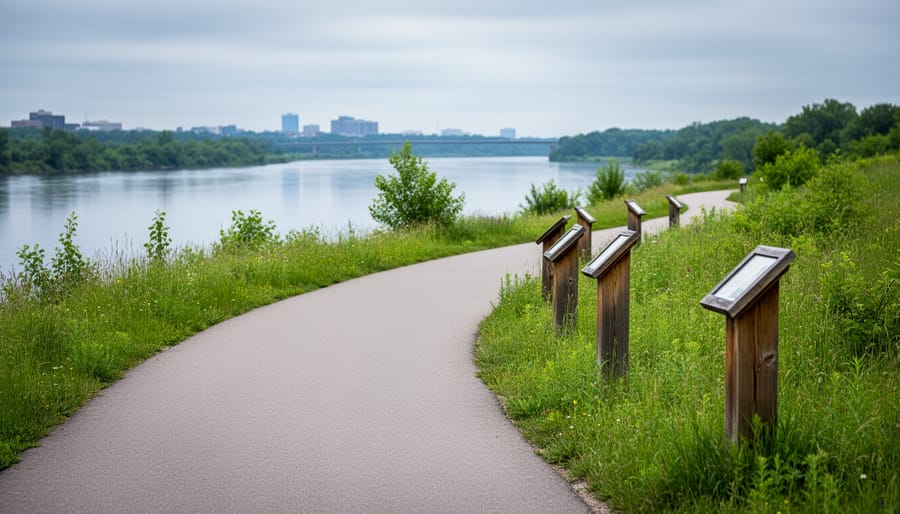

The best way to experience Indigenous history in Saskatoon on foot is to follow the heritage walking routes along the Meewasin Valley Trails, which trace the South Saskatchewan River through the same riverbanks that Cree, Dakota, Lakota, Nakoda and Métis peoples have known for generations. Plan on a gentle, mostly flat walk of an hour or two, with the option to link several stops into a longer day outdoors. Good walking shoes and a bottle of water are the only real prerequisites.
What makes this route worth your time is how much sits within easy reach of downtown. You’ll pass interpretive signage, riverside viewpoints and sites tied to Indigenous stories and the early days of the city, all on paved or well-kept paths. The trail rewards a slow pace. Stop to read, look across the water, and think about how long people have gathered here.
Below, you’ll find seven stops worth building your walk around, plus practical planning details, local tips and answers to common questions. Take your time, and treat each site with the respect it deserves.
Why Walk Saskatoon’s River Valley Through an Indigenous Lens
A heritage walking trail is a route that links places of historical and cultural meaning, usually with interpretive context along the way, so a simple stroll becomes a way of reading the landscape. The riverbank suits that idea well. Rivers were the highways, meeting grounds and seasonal camps of the northern plains long before any street grid, and the South Saskatchewan River still shapes how Saskatoon feels today.
The Meewasin Valley has been a gathering and travel place for Indigenous peoples for a very long time. The name itself comes from a Cree word often translated as “beautiful” or “one who is beautiful,” which is a fair description of the valley on a quiet morning, with the water low and the light catching the cottonwoods. Walking here, you’re stepping through a landscape that carries layers of history well beyond the modern city.
It also helps to remember where you’re standing. Saskatoon sits on Treaty 6 territory and the homeland of the Métis, and that context gives the walk its depth. Different communities hold different stories about this valley, and part of the pleasure is listening for them rather than expecting a single tidy narrative. That mix of perspectives is something locals can genuinely take pride in, and it’s a big part of what makes the city’s character what it is.
If you’d like to go deeper before or after your walk, you can learn more about Indigenous history from a local perspective. And if you’re planning around a particular date, our look at why Indigenous Peoples Day matters in Saskatoon offers useful background.
How We Chose These Stops
We chose these stops with three simple questions in mind. Does the place have a clear connection to Indigenous history, culture, or interpretation along the Meewasin Valley? Can a walker reach it from the trail without much fuss? And does it fit comfortably into a single outing, whether that’s a short riverside stroll or a fuller day with a drive?
This is a research-based guide. We haven’t walked every stop ourselves, and we aren’t claiming first-hand visits, so treat what follows as a well-informed starting point rather than a verified field report.
Trail conditions, programming, hours, and access can shift with the seasons and with maintenance work. Before you head out, check current details with Meewasin directly so your plans match what’s actually open.
Top Stops and Areas for an Indigenous Heritage Walk
1. Wanuskewin Heritage Park
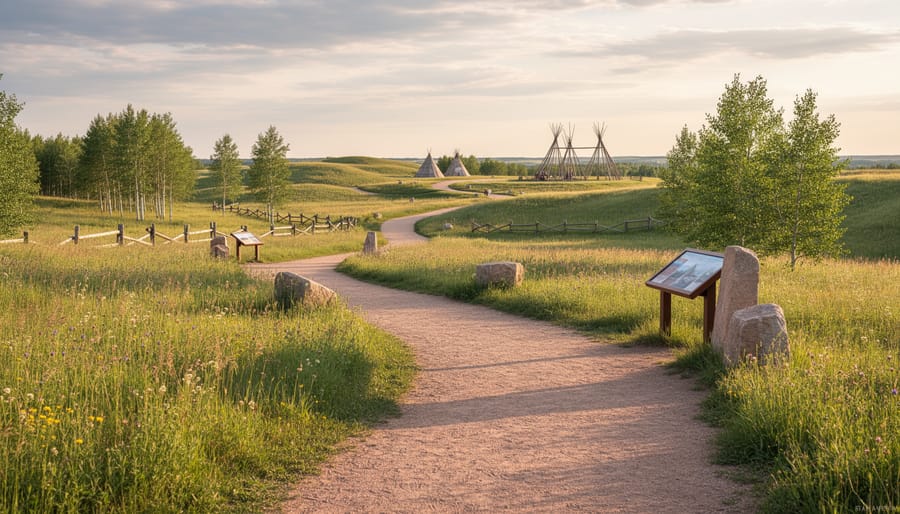
Wanuskewin Heritage Park is the best-known Indigenous cultural site near Saskatoon, and it makes a strong anchor for any heritage walking trail itinerary. Just north of the city, this nationally recognized Northern Plains site is typically a short drive from downtown. It is a separate destination from the Meewasin Valley Trails, so plan it as its own outing rather than a stop you can reach on foot from the riverbank.
The park has its own network of walking trails winding through prairie and valley landscape. The area holds deep archaeological significance, reflecting thousands of years of Indigenous gathering, hunting and ceremony on the northern plains. Walking here gives you a real sense of how the land was used and understood long before the city existed.
What sets Wanuskewin apart is its Indigenous-led programming. Interpretation and cultural experiences are shaped by the people whose ancestors lived on this land, so you hear the story from those closest to it. Offerings change over time, so confirm hours, admission and current programming directly with the park before you go.
2. Meewasin Valley Trail Along the Riverbank Downtown
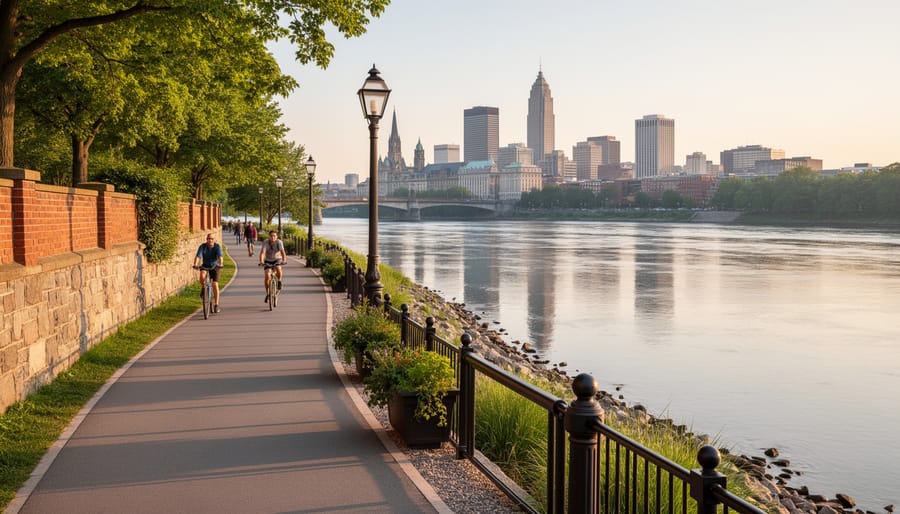
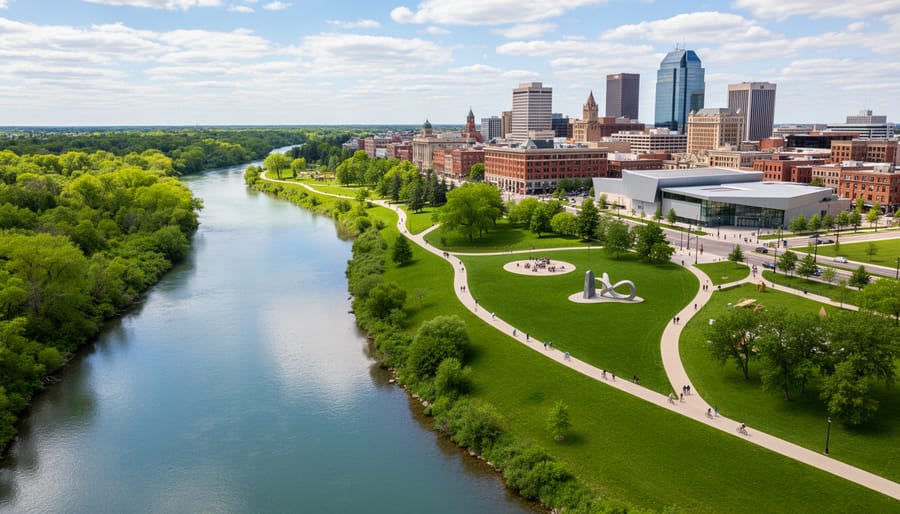
The Meewasin Valley Trail along the downtown riverbank is the easiest place to start a heritage-minded stroll in Saskatoon. This is the core pathway through the centre of the city, and the South Saskatchewan River frames the whole walk, with the water on one side and the skyline rising on the other.
Because it runs right through the downtown, you can step onto it from many points and wander at whatever pace suits you. The route links cultural sites, bridges and open green space, so you get a mix of city views and river scenery without going far. Cyclists and walkers share the path, so keep to one side and stay alert.
It’s a good first walk for anyone new to the area. Take your time, look out for interpretive signage where it appears, and let the river set the rhythm. Because the pathway is public and close to downtown amenities, it also pairs easily with a coffee stop or a visit to nearby cultural destinations.
3. Remai Modern and the Riverfront Cultural Corridor
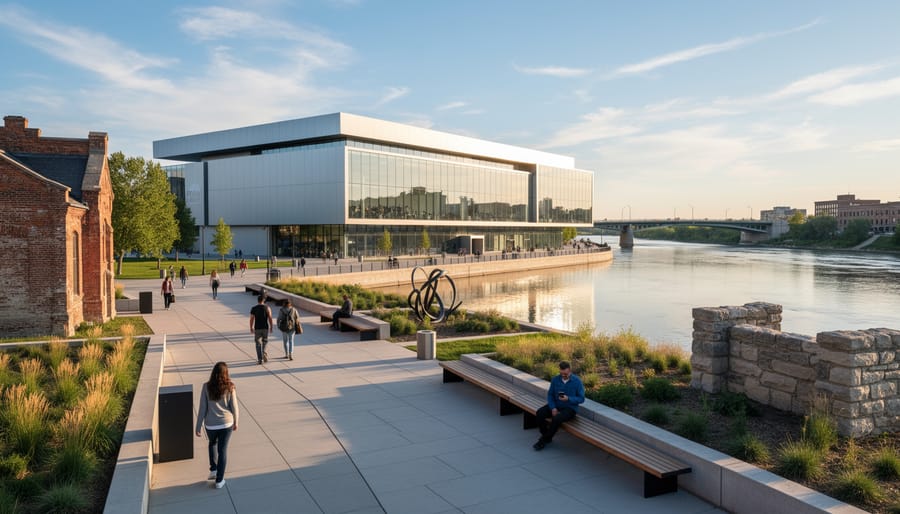
Remai Modern sits right on the riverbank, which makes it a natural pause on a heritage-minded stroll. The gallery is known for showing Indigenous artists alongside work from around the world, so a short visit can add a contemporary layer to what you’ve been learning outdoors. Where the river teaches you about place and history, the art often speaks to memory, identity and story.
The surrounding riverfront corridor is easy to enjoy on foot. Paths run past the water, with benches and open views that invite you to slow down. Pair a gallery visit with a stretch of the trail, or finish your walk indoors if the prairie weather turns. Check Remai Modern directly for current hours and what’s on view before you go.
4. Rotary Park and Spirit of Saskatoon’s Riverside Green Spaces
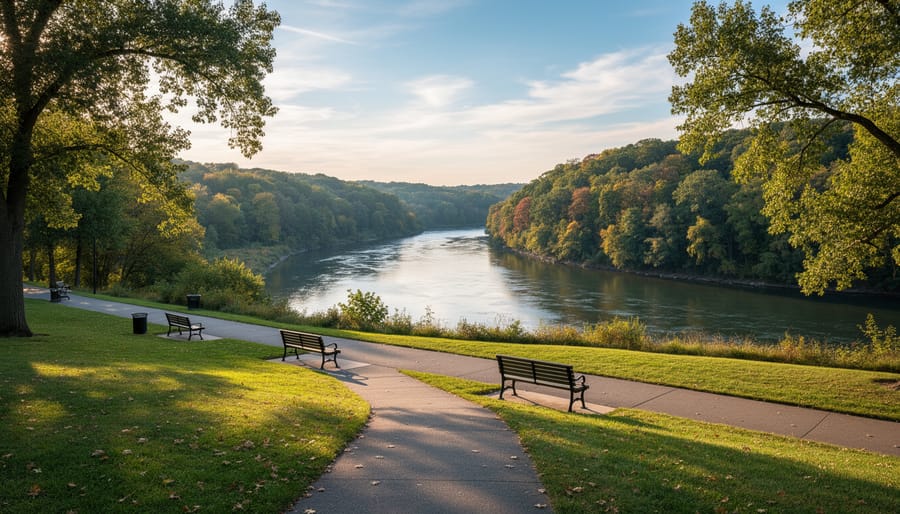
Rotary Park and the green spaces nearby are where the walk slows down. The riverbank opens up here into wide stretches of lawn and tree-lined path, and it’s easy to find a bench, sit a while, and watch the South Saskatchewan River roll by.
Treat this stretch as a place to pause rather than a place to cover ground. Where interpretive signage is posted along the trail, take a few minutes to read it, since these panels often add context about the river valley and the people who have lived with it for generations. Signage varies from one spot to the next, so don’t count on a panel at every turn.
Look out at the water, the cottonwoods, and the open sky, and let the landscape do some of the talking. It’s a quiet, reflective break between more active stops.
5. Meewasin Northeast Swale and Natural Prairie Areas
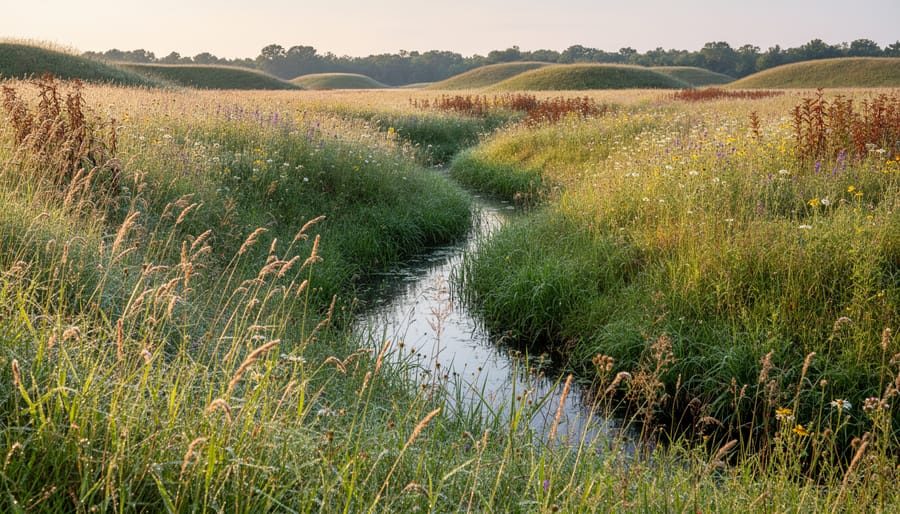
The Meewasin Northeast Swale is a good pick when you want a quieter walk. Set on the northeastern edge of the city, it is a protected stretch of natural prairie and wetland, and it gives you a feel for the landscape as it has long existed along the river valley. A swale is a shallow, low-lying channel, and this one holds native grasses, wildflowers, and seasonal water that draw birds and other wildlife.
You won’t find the polished feel of downtown paths here. The trails are more rustic, so sturdy footwear helps, especially after rain. That’s part of the appeal. With fewer crowds and open sky, there’s room to slow down and think about how Indigenous peoples relied on prairie and wetland ecosystems for food, medicine, and travel. Pair it with a visit to one of the city’s cultural stops, and the natural setting and the human story start to fit together.
6. Chief Whitecap Park and the South Saskatchewan River Valley
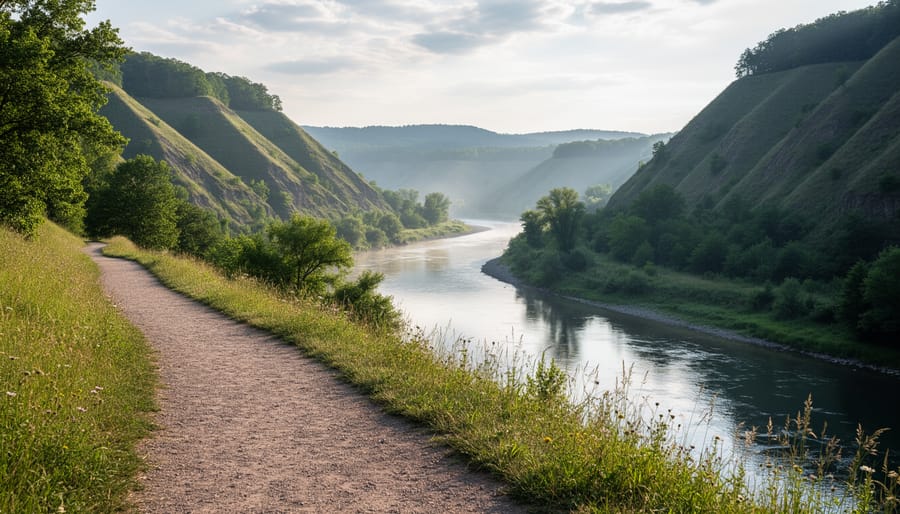
South of Saskatoon, Chief Whitecap Park sits along a scenic stretch of the South Saskatchewan River valley. It’s named for Dakota Chief Whitecap, and it connects to the story of the nearby Whitecap Dakota First Nation. If you have a vehicle, it makes a lovely add-on to a day spent on the city trails, giving you river views and open prairie landscape without the downtown bustle.
The park also reminds walkers that the valley’s history is layered. The Dakota story is part of that history, alongside Cree, Métis and others who have lived along this river. Read any interpretive signage you come across, take your time, and let the setting add context to the rest of your walk.
Conditions and amenities can change, so check with Meewasin or the park’s managers before you go.
Planning Your Walk: Practical Information
Getting to the Meewasin Valley Trail is easy because the path runs right through central Saskatoon. Downtown, you can step onto it from several spots near the riverbank, and there’s metered and lot parking in the core if you’re driving. Saskatoon Transit buses serve the downtown area, so a bus ride plus a short walk to the river works well, and the trail connects to cycling and pedestrian routes across the city. Wanuskewin and Chief Whitecap Park sit outside the core, so plan on a vehicle or a ride for those.
Timing matters on the prairies. Late spring through early fall is the comfortable window, with long summer daylight that lets you stretch an evening walk well past supper. Autumn brings colour along the river, while winter walks are lovely but call for serious layers and shorter outings, since daylight is scarce.
The trails themselves are public and free to walk. Some destinations charge admission, Wanuskewin being the obvious one, so check before you go.
| Stop or area | How to get there | Cost to access | Confirm before you go |
|---|---|---|---|
| Meewasin Valley Trail downtown | On foot or by bike from downtown, or by transit | Free to walk | Trail closures, seasonal conditions |
| Remai Modern and riverfront | Short walk from the downtown trail | Trail is free; gallery admission may apply | Gallery hours, current exhibitions |
| Northeast Swale | Drive or cycle to trailheads on the city’s edge | Free to walk | Trail access, weather and ground conditions |
| Wanuskewin Heritage Park | Short drive north of the city | Admission typically applies | Hours, admission, seasonal programming |
| Chief Whitecap Park | Drive south along the river valley | Check with the managing authority | Access, facilities, seasonal conditions |
Accessibility varies along the way. Much of the downtown riverbank path is paved and fairly level, which suits strollers and many mobility devices, but surfaces, slopes and stairs change as you move toward the natural areas. If you have specific needs, contact Meewasin or the destination ahead of time.
As for what to bring, pack water, sunscreen or layers depending on the season, comfortable shoes and a charged phone. Our prairie packing list covers the essentials for a day outdoors. For current hours, fees and conditions, always go to the official Meewasin and attraction websites.
Local Tips for Walking With Respect and Curiosity
Walking the river valley is easy, and a few small habits make it better for everyone. Start by slowing down at interpretive panels where they appear. They often carry local context you won’t get from a map, and reading them is the simplest way to show you’re curious about where you’re standing.
Some places along the river carry sacred or ceremonial meaning. If you come across people gathered for a ceremony or teaching, keep a respectful distance and keep your voice low. Always ask before photographing people, and don’t assume a ceremony is open for pictures. If you’re interested in more community gatherings, Saskatoon Circle events are a good way to learn what’s happening around the city.
Prairie weather changes fast, so the practical side matters too. Layers are your friend in every season, and sturdy shoes make the gravel and packed-earth sections far more comfortable. Shared paths get busy with cyclists, so keep to one side and listen for bells. In summer, bring bug spray, especially near the water at dusk.
Here’s a quick checklist to keep in mind:
- Stay on marked trails to protect the grasslands and riverbank.
- Pack out everything you bring, leaving no trace.
- Read signage and interpretive panels before moving on.
- Ask permission before taking photos of people or ceremonies.
- Dress in layers and carry water and bug spray.
- Keep to one side of shared paths and watch for cyclists.
Finally, consider supporting Indigenous-owned businesses and programming along the way, whether that’s a local café, an artist’s work, or a guided experience. It’s a friendly way to give back while you explore.
Quick Answers About Indigenous Heritage Walks in Saskatoon
Is the Meewasin Valley Trail free to walk?
Yes, the trails are public pathways and free to use. Some destinations along the way, such as Wanuskewin, charge admission, so check their official sites for current details.
Do I need a guide?
No, you can explore on your own using signage and interpretive panels where available. Guided programs may be offered through Indigenous-led organizations, so look for current options before you go.
How long does a walk take, and is it suitable for kids and mobility needs?
It depends on your route, since you can stroll a short riverside stretch or string several stops together over a few hours. Many sections are paved and relatively flat, which suits families and many wheelchair or stroller users, but surfaces vary, so confirm conditions with Meewasin.
When is the best time to go, and is Wanuskewin part of the Meewasin trails?
Late spring through early fall is generally the most comfortable for walking, though winter offers quiet, scenic outings if you dress warmly. Wanuskewin is a separate destination with its own trails, a short drive from the city, so plan it as an add-on rather than part of the main riverbank route.
If you’d like to pair your outing with more cultural stops, local museums and galleries make an easy indoor complement to a riverside walk.
A Riverside Walk Worth Taking in Any Season
The Meewasin Valley is one of Saskatoon’s most welcoming ways to take in Indigenous heritage. The trails are free and easy to reach, and every season gives the river a different look. A walk here can be a quiet hour along the water or a full day that includes a few of the stops above.
Pick a day, lace up, and enjoy the river.