



PT-141, also known as bremelanotide, is a synthetic peptide that acts on melanocortin receptors in the brain, which are involved in sexual desire and arousal. Unlike drugs that work on blood flow, it targets the central nervous system, and that difference is why researchers keep studying it. If you’ve seen it mentioned in online forums or clinic ads, you’re probably wondering what the science really says.
The PT-141 (bremelanotide) research peptide has a longer paper trail than most people expect. It grew out of work on melanotan II, and its best-known form was studied for hypoactive sexual desire disorder in premenopausal women. That history matters, because it separates documented findings from marketing hype.
Canada adds its own wrinkle. Health Canada regulates drugs differently than the U.S. FDA does, so approval status, prescribing rules and what clinics can legally claim don’t always line up with what you read online. This article lays out what PT-141 is, how it works, and where the research stands, in plain language and without the sales pitch.
What PT-141 Means: A Plain-Language Definition
So what exactly are we talking about? In everyday terms, bremelanotide is a synthetic peptide, a short chain of amino acids built in a lab. It’s related to a fragment of a natural hormone called alpha-MSH (alpha-melanocyte-stimulating hormone). Instead of working on blood vessels, it acts on melanocortin receptors in the central nervous system, the brain’s signalling network.
The name situation trips a lot of people up, so here’s the quick decoder:
- PT-141
- The original research name used during early development of the compound.
- Bremelanotide
- The generic (official) name for the same substance.
- Vyleesi
- The brand name under which bremelanotide is sold in the United States.
- Melanocortin receptor
- A type of docking site on nerve cells that responds to melanocortin-family signals, including those involved in arousal and desire.
- Hypoactive sexual desire disorder (HSDD)
- A medical term for persistently low sexual desire that causes personal distress.
Same molecule, three labels. That’s why online chatter can sound confusing, since one person says “PT-141” while another says “bremelanotide” or “Vyleesi.”
The backstory is a bit surprising. Researchers were originally exploring peptides that could produce a tan without sun exposure, work that led to a compound called Melanotan II. Along the way, volunteers reported effects on arousal, and that curiosity pushed scientists to refine a related molecule specifically for sexual desire. In other words, PT-141 started out as a happy accident of tanning research, then grew into its own line of study.
How Bremelanotide Works in the Body
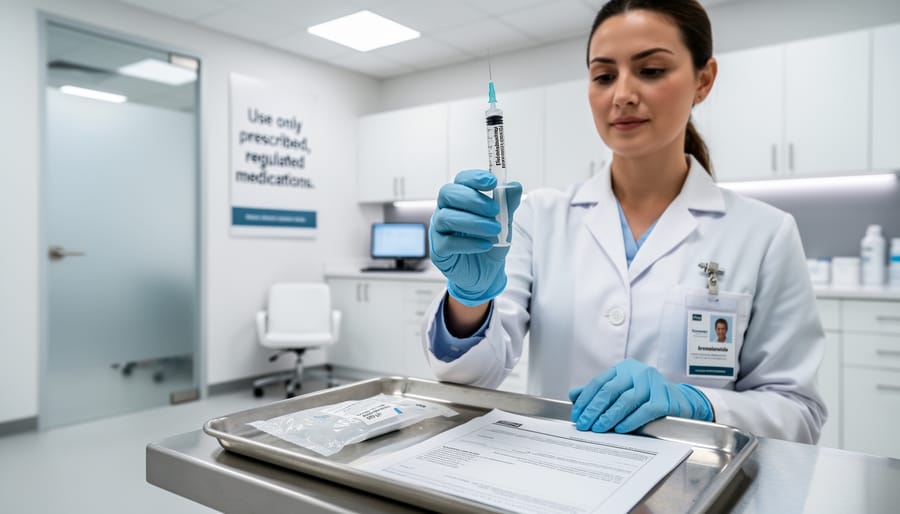
Most people have heard of medications that work on blood flow. Bremelanotide takes a different route. It activates melanocortin receptors in the central nervous system, particularly in brain regions tied to sexual arousal and desire. Think of it less as a plumbing fix and more as a signal sent to the part of the brain that helps set the mood.
That’s the big contrast with PDE5 inhibitors, the class that includes sildenafil (Viagra). Those drugs relax blood vessels so the body can respond physically once someone is already aroused. They don’t really touch desire itself. Bremelanotide, on the other hand, was developed to influence the “wanting” side of the equation, which is why researchers have mostly studied it in people whose main concern is low desire rather than a purely mechanical problem.
That distinction shapes how the research is designed. Instead of measuring blood flow or physical response, clinical trials have leaned on questionnaires where participants rate their desire and any distress it causes. It’s a subjective approach, but it fits the question being asked.
In its approved US form, bremelanotide is given as an injection under the skin, used on demand rather than taken daily. Published studies describe it as acting over a window of hours rather than minutes, with participants generally using it shortly before anticipated activity, and effects tend to be temporary. Timing varies from person to person, though, and researchers haven’t framed it as a guaranteed or instant result. Any claims about speed or duration are best read alongside the actual trial data, not marketing copy.
What the Research Shows So Far

Studies in Women with Low Desire
The most important research on bremelanotide in women comes from two large Phase 3 studies known as the RECONNECT trials. They enrolled premenopausal women diagnosed with hypoactive sexual desire disorder, or HSDD, a condition marked by persistently low desire that causes real personal distress. Participants used the injection as needed before anticipated sexual activity and were compared with others receiving a placebo.
Researchers tracked changes in self-reported desire and in distress related to low desire. On average, women using bremelanotide reported modest improvements on both measures compared with placebo. Those gains were statistically meaningful, though not dramatic, and individual responses varied quite a bit.
Based on this body of evidence, the US Food and Drug Administration approved bremelanotide, sold as Vyleesi, in 2019 for premenopausal women with acquired, generalized HSDD. This approval covers a specific group, not everyone experiencing low desire.
Studies in Men and Other Areas of Interest
Before bremelanotide was ever looked at for women’s desire, researchers had their eye on men. Early clinical studies tested PT-141 in men with erectile dysfunction, including some who hadn’t responded well to existing oral medications. The appeal made sense: because it works through the brain rather than blood vessels, it offered a different route to the same goal.
Those early trials showed some promise, but the picture was mixed. Side effects, particularly nausea and short-term rises in blood pressure, raised practical concerns, and oral options were already well established and convenient. Development in this area didn’t become the main path, and attention shifted toward hypoactive sexual desire disorder instead.
That doesn’t mean scientific curiosity has vanished. Melanocortin pathways remain an area of interest for researchers exploring how the brain shapes desire and arousal. Still, published evidence in men is limited, so it’s best to treat this as an open question rather than a settled answer.
How PT-141 Is Used (and Where It Is Regulated)
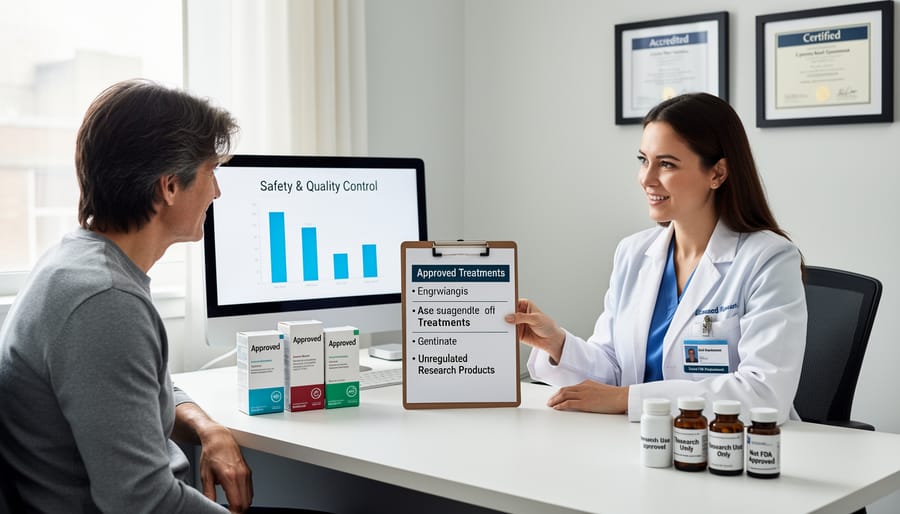
In the United States, bremelanotide is sold under the brand name Vyleesi and is approved for a narrow purpose: treating acquired, generalized hypoactive sexual desire disorder (HSDD) in premenopausal women, where low desire causes real distress and isn’t explained by another medical condition or medication. It’s given as an on-demand injection under the skin of the abdomen or thigh, roughly 45 minutes before anticipated sexual activity, not as a daily treatment.
Here’s where things get tangled. Online listings often use the name “PT-141” for products that have little in common with the approved medication.
- The approved product is made under strict manufacturing standards and prescribed for a specific indication.
- It comes as a single-dose auto-injector with a set, tested dose.
- “Research use only” labelling means a product isn’t intended for human use and hasn’t been reviewed for safety.
- Unregulated vials can vary in purity, strength and contamination, so what’s on the label may not match what’s inside.
- Without medical oversight, dosing is guesswork and side effects can go unnoticed.
For Canadians, there’s an extra layer. Health Canada reviews drugs on its own timeline, and approval in the US doesn’t mean a product can be sold here. A manufacturer has to apply, and the evidence is assessed against Canadian standards. So the fact that something is approved south of the border tells you little about whether it’s legally available at home.
That’s also why ordering “research peptides” online is risky. These products skip the quality checks you’d expect from a pharmacy, and shipping them across borders can raise legal headaches, much like the ones covered in our look at Canadian travel drug rules. If you’re ever carrying medication, a bit of road trip planning or a read through some practical travel tips can save trouble at the border.
If low desire is weighing on you, the best first step is a conversation with a family doctor or pharmacist here in Saskatchewan. They can look at the whole picture and point you to options that are actually available and properly regulated.
Safety, Side Effects, and Who Should Be Cautious
Like most medications, bremelanotide comes with trade-offs. In the clinical trials, the most commonly reported side effects were nausea, flushing, and headache. Nausea was the most frequent complaint, and for some participants it was bothersome enough to stop treatment. Other reported effects included injection-site reactions, a runny nose or cough, and dizziness.
One effect deserves a closer look: bremelanotide can cause a short-term rise in blood pressure and a temporary dip in heart rate after dosing. For most healthy people this settles within hours, but it’s the main reason caution is advised for anyone with uncontrolled high blood pressure or known cardiovascular disease. Labelling for the approved US product also flags concerns for people with certain heart or blood vessel conditions.
Another quirk: some users noticed darkening of the skin or gums, which researchers linked to the drug’s melanocortin activity.
Everyone’s health picture is different, so the practical step is a conversation with a doctor or pharmacist before considering anything in this category.
Common Questions About PT-141
Here are quick answers to the questions people ask most about PT-141.
Is PT-141 the same as Viagra?
No. Viagra and similar drugs are PDE5 inhibitors that work on blood vessels to support a physical response, while bremelanotide acts on melanocortin receptors in the brain and has been studied for its effect on desire.
Is PT-141 legal in Canada?
Bremelanotide (Vyleesi) is approved in the US, but that approval doesn’t carry over automatically. Health Canada reviews drugs on its own, so it’s worth checking the current status with a pharmacist or physician rather than assuming a product sold online is legitimate.
Is it the same as Melanotan II?
They’re related but not identical. PT-141 came out of research on Melanotan II, a tanning peptide, but bremelanotide was developed and studied as its own compound with a different focus.
Does it work for men?
Early studies looked at erectile dysfunction in men, but that path didn’t become the main focus of development, and the approved use in the US is for premenopausal women with a specific type of low desire. Evidence in men is limited, so a doctor is the right person to talk to.
Still curious? Your best bets for reliable information are Health Canada’s drug and health product resources, your family doctor, and your local pharmacist. Pharmacists in Saskatoon and across Saskatchewan are usually happy to explain how a medication works and whether a product you’ve seen advertised is a regulated one. If you come across a “research peptide” sold online, treat it with caution and run it by a professional first.
So, what have we learned? PT-141, also known as bremelanotide, is a synthetic peptide that works on melanocortin receptors in the brain to influence sexual desire, rather than simply boosting blood flow. The clinical research, mainly the RECONNECT trials in premenopausal women with low desire, points to modest but real benefits. It also leaves plenty of gaps, especially around long-term use and who it suits.
That balance matters. Online chatter and clinic marketing can make this peptide sound like a cure-all, but the evidence tells a more measured story. Before you try anything, talk with your doctor or pharmacist, and be wary of unregulated “research peptides” sold online.
Saskatoon is full of curious people, and staying curious about your health is a good thing. Whether you’re reading up on after-dark wellness or tracking Canadian health news, stick with sources you can trust.