
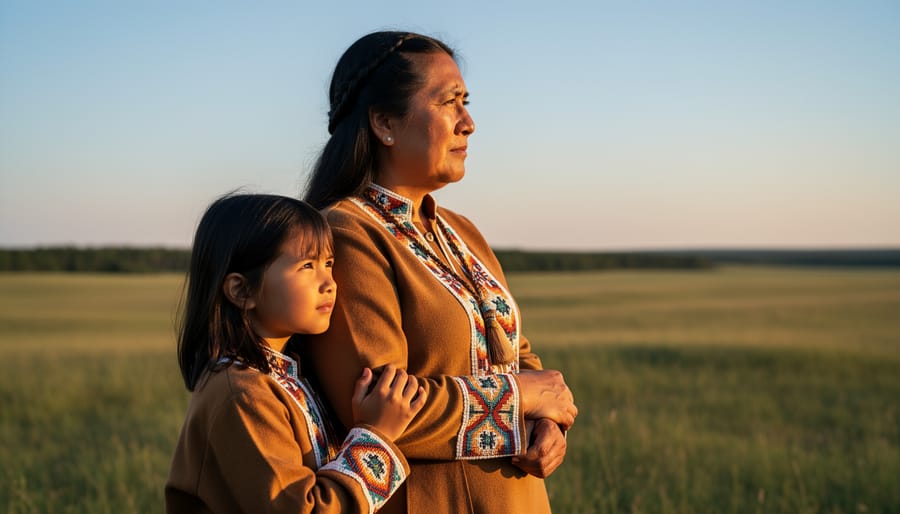

Saskatchewan is home to vibrant Indigenous communities whose histories, languages, and traditions stretch back thousands of years before this province took its current name. Yet many residents know surprisingly little about the First Nations and Métis peoples who make up nearly 17 percent of our provincial population.
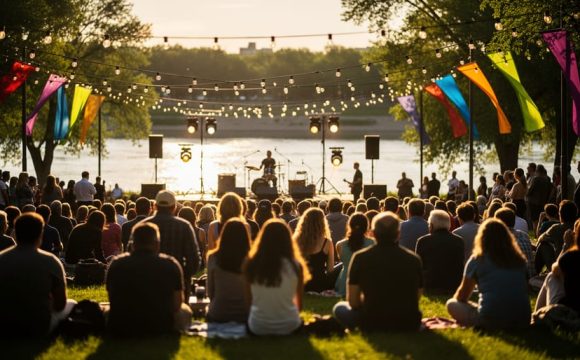
As National Indigenous Peoples Day in Saskatoon approaches each June 21, it’s the perfect time to move beyond stereotypes and discover meaningful facts about Indigenous cultures, contributions, and contemporary realities. Understanding these communities isn’t just about historical appreciation. It shapes how we interact as neighbors, colleagues, and fellow Saskatchewanians in a province where Indigenous and non-Indigenous people share schools, workplaces, and public spaces every day.
The following five facts offer a starting point for deeper learning. They touch on language revitalization efforts happening right here in Saskatoon, the constitutional rights that distinguish Indigenous peoples in Canada, and the rich diversity that exists among different nations and communities. Whether you’re a long-time resident or new to our city, these insights will help you better understand the Indigenous presence that has always been central to this territory.
Indigenous Peoples Are Not a Single Group
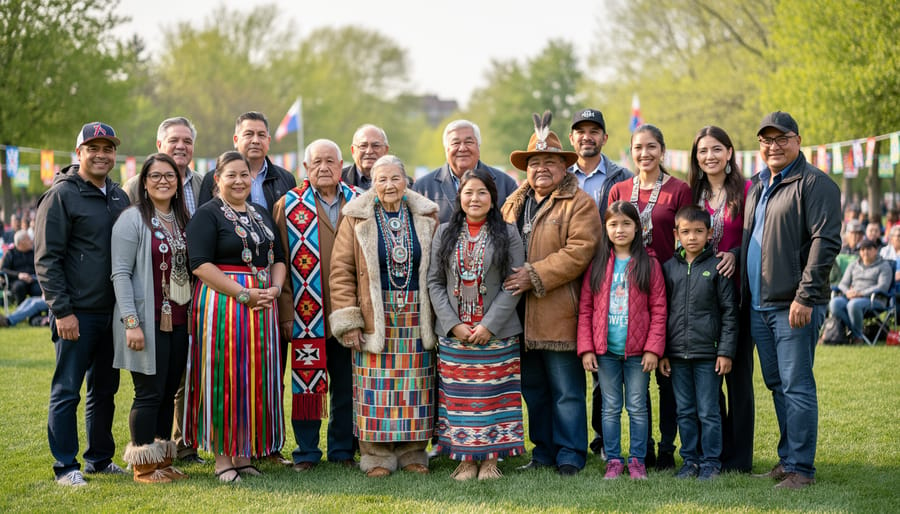
When celebrating Indigenous cultures it’s crucial to recognize that Indigenous peoples in Canada are far from monolithic. The term “Indigenous” encompasses three distinct groups: First Nations, Inuit, and Métis, each with their own languages, governance systems, spiritual practices, and cultural traditions that have developed over thousands of years.
First Nations peoples include hundreds of distinct nations, each with unique identities. The Inuit primarily inhabit Arctic regions with a culture adapted to northern environments. The Métis emerged as a distinct nation with their own language (Michif), flag, and traditions rooted in both Indigenous and European ancestry.
In Saskatchewan specifically, the cultural landscape includes Cree, Dene, Saulteaux, Dakota, Lakota, and Nakota peoples, among others. The Cree alone have multiple distinct groups with different dialects and traditions. Treaty 6 territory, which includes Saskatoon, is traditionally Cree territory, but the province has always been home to multiple nations with different languages and worldviews.
Each nation has its own protocols, governance structures, and ways of relating to the land. The Cree concept of “Miyo-wîcêhtowin” (good relations) differs from Dakota “Woohitika” (bravery and generosity), though both represent important cultural values. What works as appropriate protocol in one community may differ in another.
This diversity means there’s no single “Indigenous perspective” on any issue. A Métis person from Regina may have entirely different experiences and viewpoints than an Inuit person from Nunavut or a Dene person from northern Saskatchewan. Recognizing these distinctions isn’t splitting hairs. It’s basic respect for the rich tapestry of cultures that have shaped this land since time immemorial.
Treaties Are Living Agreements, Not Historical Relics
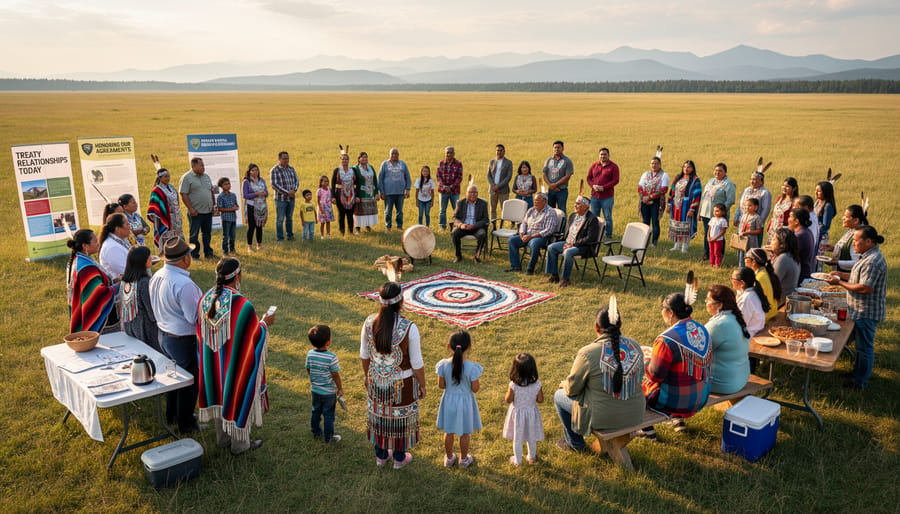
When newcomers and settlers signed treaties with Indigenous nations across Canada, they weren’t just completing historical paperwork. They were entering into relationships that continue today. Treaty 6, signed in 1876 and covering the Saskatoon region, represents a solemn agreement between the Crown and First Nations that remains legally binding and morally significant in 2025.
The phrase “we are all treaty people” reflects a crucial truth often overlooked in Canadian education. Treaties created mutual obligations. While First Nations agreed to share the land, the Crown promised specific rights in return, including education, healthcare, and the ability to maintain traditional livelihoods. These aren’t outdated concessions. They’re ongoing commitments that shape contemporary life, from hunting and fishing rights to jurisdictional questions about education and child welfare.
Many Saskatoon residents live, work, and raise families on Treaty 6 territory without understanding what that means. The treaty established a nation-to-nation relationship based on principles like mutual respect and shared prosperity. When those principles get ignored or violated, it doesn’t just harm Indigenous communities. It breaks the foundational agreement that allows all of us to be here.
Treaty rights aren’t special privileges. They’re constitutionally protected agreements negotiated between sovereign nations. When a First Nations person exercises treaty hunting rights, they’re not getting something extra. They’re accessing what was explicitly promised in exchange for sharing vast territories.
Understanding treaties requires recognizing that Indigenous nations didn’t surrender their identities, governance, or cultures when they signed. The agreements were meant to allow peaceful coexistence and sharing of the land, not the erasure of Indigenous peoples. That distinction matters when we consider reconciliation and what it means to honour these living agreements in our daily lives.
Indigenous Languages Hold Ancient Knowledge
Indigenous languages aren’t just different ways of saying the same things, they’re completely different ways of understanding the world. When a language disappears, entire systems of knowledge vanish with it.
Consider Cree, one of the most widely spoken Indigenous languages in Saskatchewan. The language structures relationships and responsibilities into its very grammar. Instead of simply saying “my grandmother,” Cree distinguishes whether you’re referring to your maternal or paternal grandmother, embedding family connections into everyday speech. Cree verbs don’t just describe actions; they express whether you witnessed something firsthand or heard about it from someone else, building accountability and truth into communication itself.
This linguistic precision extends to environmental knowledge. Many Indigenous languages have dozens of words for snow conditions, ice formations, or plant growth stages that English collapses into single terms. These distinctions represent centuries of careful observation and survival knowledge. When elders speak about the land in their ancestral languages, they access information that gets lost in translation.
Saskatchewan is home to 11 Indigenous languages, yet many face critical endangerment. Fewer than 1,000 fluent speakers remain for languages like Dene and Dakota. Recognizing this crisis, communities across the province have launched revitalization efforts. The Saskatchewan Indigenous Cultural Centre in Saskatoon offers language classes in Cree, Saulteaux, Dakota, Lakota, Nakota, and Dene. Several schools now offer Indigenous language instruction, and the University of Saskatchewan provides credit courses in Cree and other Indigenous languages.
Language apps, immersion camps, and mentorship programs pair fluent elders with younger learners. These aren’t simply preservation efforts, they’re movements to keep living knowledge systems thriving. Learning even basic phrases demonstrates respect and opens doors to deeper cultural understanding that benefits everyone in treaty territory.

Indigenous Innovations Shape Modern Life
Many everyday items and practices originated with Indigenous peoples, yet this history remains largely unacknowledged. From transportation to agriculture, medicine to governance, Indigenous innovations continue to shape modern life in ways most people don’t recognize.
The Three Sisters agricultural system developed by Indigenous peoples across North America demonstrates sophisticated ecological knowledge. By planting corn, beans, and squash together, each plant supports the others: corn provides a structure for beans to climb, beans fix nitrogen in the soil, and squash leaves shade the ground to retain moisture and prevent weeds. This companion planting technique predates modern permaculture by centuries and remains relevant to sustainable farming today.
| Innovation | Indigenous Origin | Modern Application |
|---|---|---|
| Kayak | Inuit peoples | Recreation, search and rescue, military operations |
| Snowshoes | Various First Nations | Winter recreation, backcountry travel, emergency services |
| Controlled burns | Prairie Indigenous communities | Forest management, ecosystem restoration, fire prevention |
| Iroquois Confederacy governance | Haudenosaunee peoples | Influenced democratic systems, including aspects of the U.S. Constitution |
Saskatchewan’s Indigenous peoples contributed specific innovations adapted to prairie life. Controlled burning practices, used by Cree and other nations to manage grasslands and encourage new growth for bison, are now recognized as essential for ecosystem health. Modern land managers increasingly consult Indigenous knowledge holders to implement these traditional practices.
Indigenous medicine has given the world numerous treatments. Willow bark, used by many First Nations for pain relief, led to the development of aspirin. Prairie Indigenous peoples used echinacea for infections and injuries long before it became a popular herbal remedy.
These contributions represent just a fraction of Indigenous innovations. Recognizing them challenges the misconception that Indigenous societies were static or technologically simple, revealing instead millennia of problem-solving, observation, and adaptation that continues to offer solutions for contemporary challenges.
Reconciliation Requires Action, Not Just Awareness
Celebrating National Indigenous Peoples Day is meaningful, but real reconciliation demands ongoing commitment beyond a single date on the calendar. In 2015, the Truth and Reconciliation Commission released 94 Calls to Action, a roadmap for healing the relationship between Indigenous and non-Indigenous peoples in Canada. These calls address everything from education reform to child welfare, health care to justice systems. Progress has been slow, with many calls still unaddressed, yet each person can contribute to this collective work.
Supporting Indigenous-owned businesses represents one tangible way to participate in economic reconciliation. Saskatoon offers numerous Indigenous enterprises, from art galleries and restaurants to consulting firms and retail shops. Your purchasing decisions can directly support community self-determination and prosperity.
Education forms another cornerstone of reconciliation. Reading books by Indigenous authors, following Indigenous journalists and activists, and learning the true history of residential schools, land dispossession, and ongoing systemic barriers builds the knowledge base needed for informed allyship. Seek out resources created by Indigenous people themselves rather than relying solely on non-Indigenous interpretations of their experiences.
Attending Indigenous Peoples Day events connects you with local communities and their cultural expressions. Throughout the year, powwows, language classes, art exhibitions, and cultural workshops provide opportunities to listen, learn, and show respect.
Reconciliation also means advocating for systemic change. Contact elected officials about implementing the Calls to Action, support Indigenous-led environmental initiatives, and challenge racist attitudes when you encounter them. Awareness matters, but transformation happens through sustained action and a willingness to do the sometimes uncomfortable work of examining our own roles in colonial systems.
National Indigenous Peoples Day on June 21 marks more than a day of celebration. It’s a starting point for deeper engagement with the histories, cultures, and contemporary realities of First Nations, Inuit, and Métis peoples. The five facts we’ve explored reveal just how much there is to learn locally in Saskatoon and across Treaty 6 territory.
Real understanding comes from ongoing education, not a single day of awareness. Attend cultural events, support Indigenous-owned businesses, and seek out opportunities to hear directly from Indigenous voices. This June 21, Saskatoon will host traditional dancing, storytelling, and art displays at various venues throughout the city. Check community boards and local event listings for specific times and locations.
The journey toward reconciliation requires consistent effort and genuine relationship-building. Let this day inspire you to engage respectfully with Indigenous communities year-round, recognizing that their knowledge, resilience, and contributions continue to shape Saskatchewan and Canada as a whole.